


When comparing a fiberglass vs. steel door for energy efficiency, the honest answer is that fiberglass has a measurable but 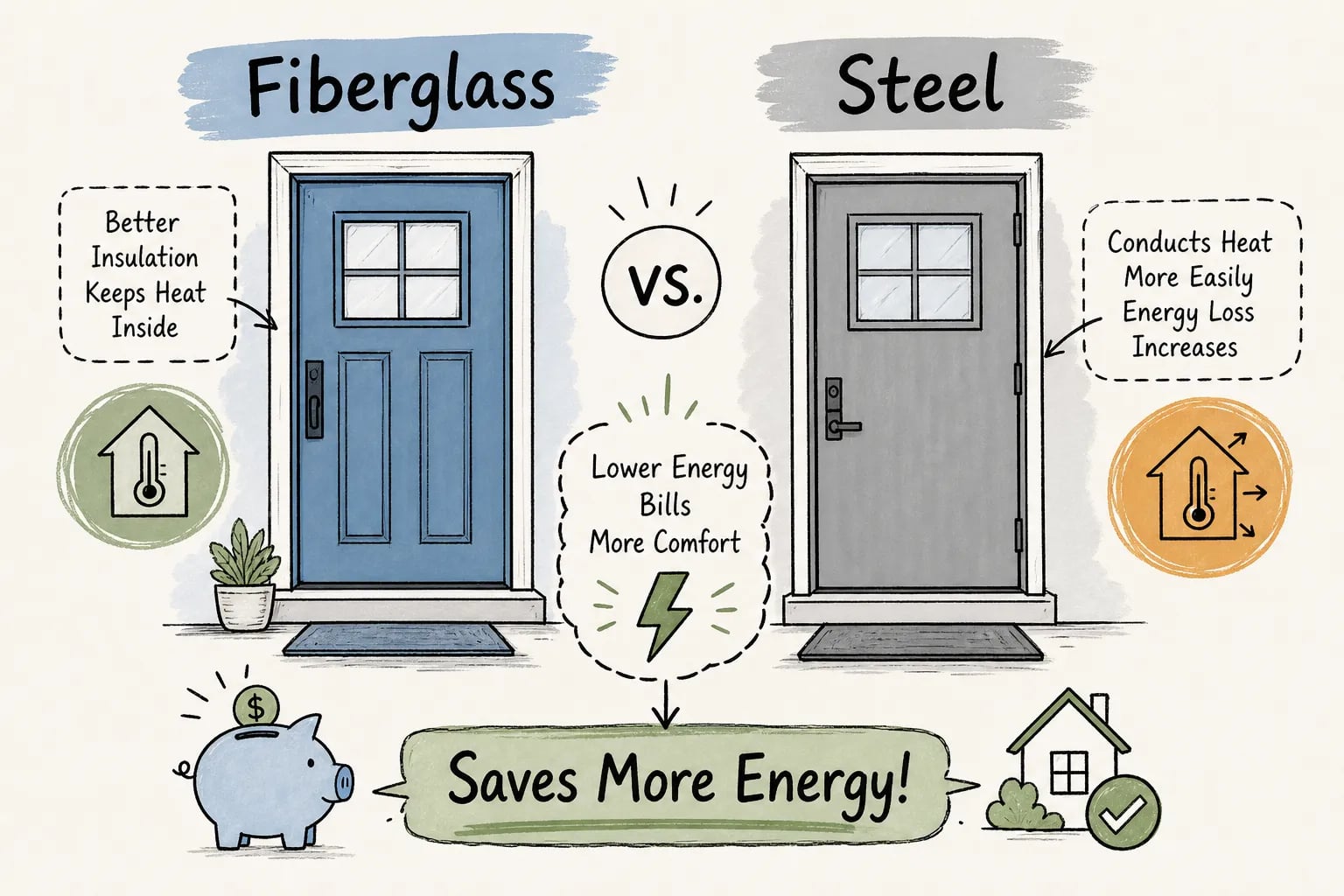 modest edge, and in Minnesota’s brutal winters, that difference is real but smaller than most homeowners expect. Both materials use foam-filled cores and perform in overlapping insulation ranges, which means the bigger performance gap usually comes from installation quality and air sealing, not the skin material itself. Here are the numbers you need to make a confident call.
The core thermal data for both materials is close enough that marketing claims often exaggerate the gap. Here’s what the specs actually show for quality insulated doors without glazing:
| Door type | Typical R-value | Whole-door U-factor |
|---|---|---|
| Fiberglass, foam-filled | R-5 to R-7 | 0.16 to 0.20 |
| Steel, foam-filled | R-5 to R-6 | 0.17 to 0.22 |
Lower U-factor means less heat escaping. For Minnesota winters, targeting a whole-unit U-factor of 0.20 or lower is the right benchmark; for an opaque door in the Northern climate zone, ENERGY STAR sets the bar at 0.17 or lower. Glass inserts and sidelights pull these numbers up fast, so an opaque door always outperforms a glazed one of the same construction.
Steel conducts heat far more readily than fiberglass, which creates thermal bridging risk without a properly designed thermal break. A well-built steel door with a continuous thermal break, using polyamide or polyurethane separators, can close most of that gap, but it adds cost and depends on frame design. Fiberglass doesn’t carry that vulnerability. Its skin is a natural insulator, which is why it holds its rated U-factor more consistently across different frame conditions. That’s the core of the fiberglass vs. steel energy performance debate: fiberglass simply has fewer weak points by design.
The core material is only one part of the heat-loss equation, and often not the most important one. Polyurethane foam, which fills voids and bonds to both door skins, delivers the highest insulating value per inch of any common core. Polystyrene board inserts are a step down because seams and gaps reduce effective performance. Hollow cores have almost no insulating value and shouldn’t be considered for any exterior opening. Even so, a door with a premium polyurethane core and worn weatherstripping will still bleed heat all winter long.
Air infiltration is usually the bigger culprit than core material in any entry door energy efficiency comparison. Gaps around the frame, a misaligned door, a failed threshold seal, or compressed weatherstripping that no longer makes full contact are what most homeowners are losing heat through. Research on entry door air infiltration shows that poor alignment of just 1/8 inch can increase air leakage by 20 to 50 percent. When comparing any two doors, ask for the tested air-infiltration rating for the complete unit, not just the slab R-value.
A professionally installed entry door can reduce frame infiltration by up to 83 percent compared with DIY installs that rely on fiberglass-batt insulation, and delivers roughly 15 to 20 percent greater overall energy efficiency. That improvement comes from continuous low-expansion foam sealing, proper flashing, plumb and square alignment, and fully compressed weatherstripping. These aren’t small differences.
The Twin Cities experience large indoor/outdoor temperature differentials in winter. Freeze-thaw cycles stress frames, thresholds, and seals repeatedly through the season. A door that isn’t squared up and sealed correctly will leak noticeably by February. Upgrading from steel to fiberglass but installing the door poorly will cost more and perform worse than a well-installed steel door. The installation is not a detail you can skip.
Steel doors hold up well structurally, but corrosion is the long-term threat to energy performance. A scratch, chip, or exposed edge allows moisture to reach the steel. Rust can spread beneath coatings, distort the slab, and open pathways for drafts. In Minnesota’s salt season, door edges and bottom corners are especially vulnerable. A steel door that isn’t touched up promptly after damage will gradually perform below its original U-factor rating, even if it still closes and locks.
Fiberglass is more corrosion-resistant and generally more dimensionally stable and dent-resistant than steel, so it holds up better under freeze-thaw cycling. Its dimensions stay stable across seasons, which means weatherstripping stays compressed and seals hold. The weatherstripping and threshold still need periodic inspection and replacement, but the slab itself doesn’t degrade the way steel does in a corrosive environment. For a wet, shaded, or salt-exposed entry, fiberglass offers longer corrosion-free service and more stable weatherstripping performance over time.
Steel entry doors and comparable fiberglass units.
|
Door type |
Installed price |
|---|---|
|
ProVia Legacy Steel |
$3,500–$7,000 |
|
ProVia Ascent Fiberglass |
$5,000–$10,000 |
|
ProVia Signet Fiberglass |
$7,000–$18,000+ |
|
Fiberglass door |
Installed price |
|---|---|
|
ProVia Ascent Fiberglass |
$5,000–$10,000 |
|
ProVia Signet Fiberglass |
$7,000–$18,000+ |
These are general 2026 Twin Cities planning ranges, not quotes from Window Outfitters. Your actual price will depend on the product, size, glass, hardware, condition of the opening and installation requirements.
The energy savings from choosing fiberglass over a comparable insulated steel door are real but modest: ENERGY STAR modeling puts annual savings in northern climate zones at roughly $7 to $20 from the performance difference alone. At that rate, the upfront premium takes decades to pay back through utility bills.
If the decision is based purely on energy savings payback, steel is the more cost-efficient choice for most homeowners. But fiberglass earns its price through lower lifetime maintenance, corrosion resistance, dimensional stability, and consistent long-term performance. For homeowners planning to stay in their home 15 or more years, fiberglass often makes more financial sense when total cost of ownership is considered. For tighter budgets or a home being prepared for resale, a quality insulated steel door installed correctly delivers strong performance at a lower entry price.
When weighing a fiberglass vs. steel door for energy efficiency, the right answer depends on your budget, your home’s exposure, and how long you plan to stay. Fiberglass has a slight insulation edge, holds up better over time, and sidesteps the thermal bridging risk that steel carries without a proper thermal break. Steel costs significantly less upfront and performs nearly as well when it’s properly built and correctly installed. For most homes, the bigger variable isn’t fiberglass vs. steel, it’s the quality of the door assembly and the quality of the installation.
At Window Outfitters, Inc., we carry entry doors in both materials from ProVia, and we can walk you through a side-by-side comparison in our Minneapolis showroom. We’ll pull the actual U-factor specs, show you the core construction, and talk through what makes sense for your specific home, climate exposure, and budget. If you’re replacing an entry door in the Twin Cities area, schedule an appointment and we’ll give you a clear answer.
Fiberglass has a slight edge in rated R-value (R-5 to R-7 vs. R-5 to R-6 for steel) and holds its U-factor more consistently because its skin doesn’t conduct heat the way steel does. In practice, however, installation quality and air sealing have a larger impact on real-world energy performance than the skin material alone.
For an opaque entry door in Minnesota’s Northern climate zone, ENERGY STAR specifies a whole-unit U-factor of 0.17 or lower. If your door includes glass inserts or sidelights, those panels pull the whole-unit number up, so look for the lowest available glazed-unit U-factor if you want glass in the design.
Yes. Research shows that professional installation using continuous low-expansion foam, proper flashing, and fully compressed weatherstripping can reduce frame infiltration by up to 83 percent compared with DIY installs that rely on fiberglass-batt insulation. A perfectly rated door installed poorly will consistently underperform a mid-grade door installed correctly.
ENERGY STAR modeling puts the annual energy savings difference between fiberglass and comparable insulated steel doors at roughly $7 to $20 in northern climate zones. The payback period from energy savings alone is long, often measured in decades, so most homeowners factor in durability and maintenance costs when making the final call.
Pricing Disclaimer: The prices listed above are general ballpark estimates provided for informational purposes only. Actual costs may vary depending on door size, style, materials, glass options, hardware, finishes, installation requirements, and other project-specific factors. These estimates are not binding quotes or guaranteed prices. Window Outfitters is not obligated to honor the estimated price ranges shown. A final price will be provided only after evaluating your specific project and preparing a written estimate.
Window Outfitters is a premier Window Replacement, doors, siding contractor and installer. As Contractor in the St Paul, Minneapolis, (Twin Cities) Minnesota (MN) metro, we proudly serve, but are not limited to, the following areas: Minneapolis Energy Efficient Vinyl Windows, Replacement Window Contractors Minnesota, Burnsville, Apple Valley, Lakeville, Savage, Bloomington, Edina, Richfield, Eagan, St Paul, Hastings, Minnetonka, Plymouth, Maple Grove, Eden Prairie, Farmington MN, Chaska, Shakopee, Chanhassen, Victoria, Mendota Heights Anderson Windows Minneapolis, Marvin Windows Minneapolis.
